Puddle-Proof Pavements: A Practical Winter Foot Guide for UK Commuters in 2026

Photo: Nigel Chadwick, CC BY-SA 2.0, via Wikimedia Commons
Winter commuting in the UK has a way of finding the weakest point in your outfit: your feet. A damp platform, a puddle hiding a kerb, a train carriage that is either arctic or tropical — it is a lot to ask of a pair of trainers. And when the temperature drops, the consequences are not just soggy socks. Cold, wet feet can make chilblains more likely, aggravate Raynaud's, rub orthotics in the wrong places and turn a short walk to the office into a grim shuffle.
This is not a plea to buy the biggest boots you can find. It is a guide to making smarter choices in 2026, using the bits of footwear technology that genuinely help and ignoring the bits that just add bulk.
Think route first, boot second
Before you look at membranes or insulation, map your commute. Do you stand on a platform for 15 minutes? Walk through a park? Cycle to the station? Sit in a warm office all day? Your feet need to handle wet, cold and sweat, often in the same hour. A boot that is brilliant for a muddy dog walk may be overkill on a busy train, while a waterproof trainer can be fine on a short urban commute if your socks and gaiters do their job.
Waterproof and breathable are not opposites
The useful technology here is the membrane: a thin layer that stops liquid water getting in while letting water vapour out. It works best when the boot has sealed seams, a decent cuff and a tongue that stays put. Look for terms like waterproof rather than water-resistant, and check the seams rather than trusting the label.
Breathability matters because sweat is the enemy of warm feet. If moisture cannot escape, your socks get damp from the inside and your toes get cold. That is why a well-made waterproof boot with a breathable lining often beats a completely rubberised welly for a long commute. If you do wear wellies, add a moisture-wicking liner sock and dry them properly afterwards.
Insulation without overheating
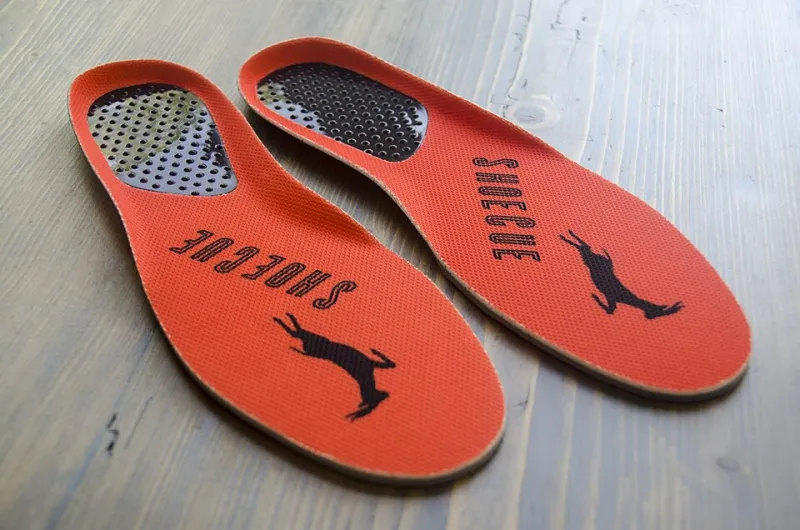
More insulation is not always better. On a moving commute, feet can overheat, then chill when you stop. Thin merino or synthetic socks usually work better than thick cotton, which holds moisture. Look for boots with a removable footbed so you can dry them and adjust volume. If you wear orthotics, that removable layer is not a bonus; it is essential.
Fit winter boots around your orthotics
This is where many comfortable shoe plans fall apart. A winter boot may feel fine in the shop with its own footbed, but cramped once your orthotic goes in. Take your orthotics with you. Remove the stock footbed if the boot allows, drop the orthotic in, and check there is room for your toes to wiggle. Your heel should stay locked in without pinching, and the boot should not force your foot into a narrow channel.
Try boots at the end of the day, when feet are slightly larger, and wear the socks you plan to commute in. Check the depth over the instep and the width across the forefoot. If the boot has a zip or laces, make sure you can adjust it around the orthotic rather than just tightening everything. A rigid orthotic in a flexible boot can work, but the boot needs a stable heel and enough structure to stop the foot rolling inward.
Grip for wet leaves, tiled stations and slippery steps
UK winter pavements are a mix of wet leaves, greasy paving, slush and polished station floors. Deep lugs help on mud but can feel clumpy indoors; a rubber compound designed for wet grip and a tread with plenty of edges is often a better commuter compromise. Check the heel brake area and the forefoot tread. If you are switching from trainers, test the boot on a wet day before relying on it for a full commute.
Chilblains and Raynaud's: know the early signs
Chilblains are small, itchy, red or purple swellings, usually on toes, that can burn or sting after cold exposure. They are not just 'cold feet'. Raynaud's causes fingers or toes to change colour — white, then blue, then red — often with numbness or pain. If you notice these symptoms for the first time this winter, or they are getting worse, speak to a pharmacist, GP or podiatrist. Do not rub cold feet vigorously or put them straight on a radiator; warm them gradually.
The trainer-to-boot switch
Do not wait for the first frost. Wear your winter boots for short walks first, with your commuting socks and orthotics, to find hot spots. Rotate footwear where you can, and dry boots away from direct heat. Keep a spare pair of socks at work. If your trainers are still the most comfortable option, save them for dry days and use a waterproof boot for wet ones rather than forcing one pair to do everything.
A simple 2026 commuter kit
Waterproof boot with sealed seams and a removable footbed; thin merino or synthetic socks; spare socks; orthotics checked for fit; a boot that grips on wet paving; and a plan for drying. That is less about gadgetry and more about matching the technology to the journey.
If you have persistent pain, recurring chilblains, Raynaud's or orthotics that no longer fit your winter footwear, see an HCPC-registered podiatrist. The right boot can make a commute bearable; the right advice can make it comfortable.