Size 9, Three Widths, No Consistency: Why UK Shoe Fits Keep Failing Broad Feet
Ask a group of British adults what size they take and most will answer instantly, with total confidence, and be wrong. Not wrong about the number they quote — wrong about whether that number fits them.
UK shoe sizing is a length system. It has never carried a legally enforceable width standard, and retailers are under no obligation to publish the width of anything they sell. Which means that if your forefoot is broader than the average last, you are essentially shopping in the dark, guided by a single number and a lot of optimism.
A number that only measures one thing
The UK size scale descends from the barleycorn system — one size being a third of an inch — and it is fine as far as it goes, which is length. Two feet of identical length can differ by well over a centimetre in width, and by more still in forefoot volume. None of that appears on the box.
The Brannock device, that sliding metal contraption you occasionally still see in independent shoe shops, measures heel-to-toe length, arch length and width together. It is not perfect, but it is a great deal better than a brannock-free guess. Most high-street chains no longer keep one behind the counter.
'Wide fit' is a marketing term, not a measurement
Here is where things get properly messy. Walk along one British high street and you will meet at least four different systems claiming to describe the same thing:
- Letter fittings — E, F, G, H — inherited from traditional last-making, where each step is a few millimetres across. A G in one house is not a G in another.
- 2E and 4E notation, borrowed from US and athletic sizing, where the E count rises with width.
- Plain 'wide fit' capsules, where a retailer has taken a standard last, added volume across the forefoot, and mapped the result to its own internal sizing.
- Nothing at all, where a shoe is simply described as 'roomy' in the product copy.
None of these are interchangeable. A shoe labelled 2E from one running brand may be narrower than a shoe labelled G from a traditional maker, and both may be narrower than an unbranded 'wide' from a value chain. The number on the box is a hint, not a specification.
What a narrow shoe does to a foot over time
Squeezing into a shoe that is too tight across the ball of the foot is not a cosmetic inconvenience. The forefoot is a structure designed to spread and load — the metatarsals splay slightly under weight, and the toes grip and push.
Constrict that and you get a predictable list of trouble: rubbing and blisters at the fifth toe and the little-toe joint, black toenails after long walks, irritation of the interdigital nerves between the third and fourth toes, callus under the ball, and a general loss of push-off power. There is a well-documented association between narrow, pointed toe boxes and hallux valgus, though footwear is one factor among several, including genetics.
There is also a subtler cost. A foot that cannot feel the ground properly — because it is braced against the sides of a shoe — reports less sensory information upwards. Balance work, ankle stability and confidence on uneven ground all suffer.
Toe-box shape beats the width number
Two shoes can measure identically across the ball and feel completely different, because the shape of the toe box does most of the work.
A tapered toe box narrows towards the front, following the line of a shoe rather than the line of a foot. Great for looking sleek, poor for fourth and fifth toes.
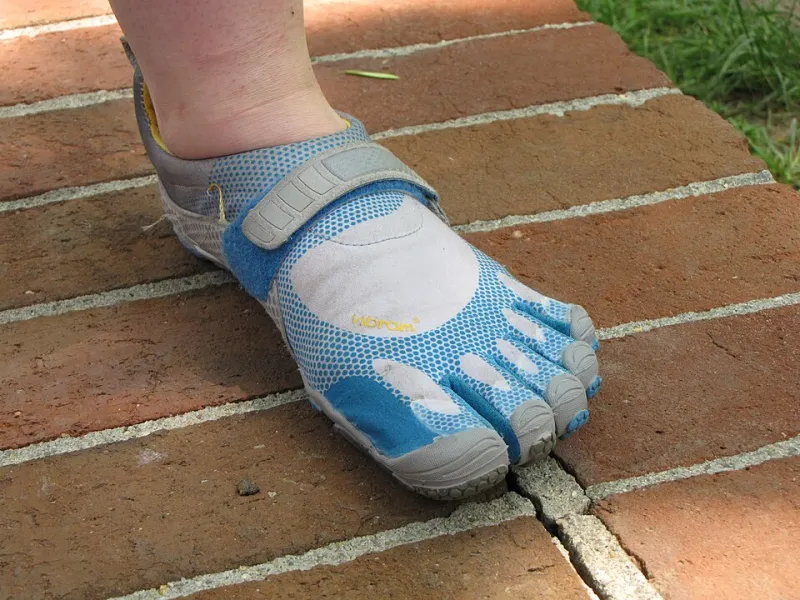
A foot-shaped toe box stays broad to the end and lets the toes lie flat and slightly spread. Increasingly common in walking and running ranges, and immediately obvious once you have worn a pair.
Watch for two other variables while you are at it. Volume — how much height there is above the toes — matters as much as width for anyone with a high instep. And toe spring, the upward curve at the front, changes how much your toes have to work; a stiff, heavily sprung shoe can mask a poor fit in the shop and reveal it at mile eight.
Five fit checks you can do at home
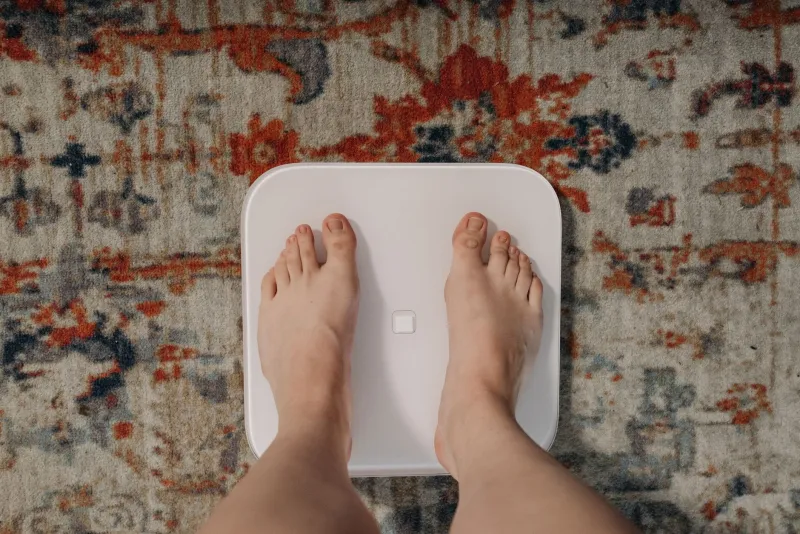
- Trace your foot. Stand on a sheet of A4, weight through the foot, and draw around it. Measure the widest point across the ball. Do it in the evening, when feet are at their largest.
- Compare against the sockliner. Pull the removable insole out of the shoe and stand on it. If any part of your foot hangs over the edge, the shoe is too narrow, whatever the label says.
- Use the thumb rule. With the shoe on and laced, you want roughly a thumb's width — call it 10 to 12mm — between your longest toe and the end of the shoe, measured standing up rather than sitting down.
- Do the toe wiggle. All five toes should lift and spread without pressing against the upper. If the little toe is pinned, size up or change shape.
- Check the heel separately. A wide forefoot often comes with a narrow heel, which is why so many people end up with a shoe that is roomy at the front and sloppy at the back. Lacing patterns — a heel-lock or runner's tie — can solve that without changing size.
One more: after a long walk, look at where the redness and hot spots are. Your feet leave a fit report every time.
Buying advice by type
Walkers. Prioritise a foot-shaped toe box and a flexible forefoot. Leather uppers will give a little over weeks; synthetic and knit uppers mostly will not, so buy those correctly from day one. Removable footbeds are a bonus if you wear orthotics.
Runners. Most major running brands now offer a wide version of at least one core model, usually in a 2E equivalent. For long distances, remember feet swell: many broad-footed runners do better with a half size up in the wide fit than their usual length. Trails reward a roomier toe box because descents push the foot forward.
Commuters. Pointed toes and slim lasts are the enemy here. Look for a round or squared toe, a soft vamp, and enough depth that your toes are not touching the upper when you stand. If you wear the same pair five days a week, buy two pairs and rotate them — uppers recover, feet appreciate it.
When it is not just a width problem
If a shoe that used to fit has stopped fitting, or if one foot has changed shape, that is worth a conversation with a podiatrist rather than a bigger box. Bunions, swelling related to circulation or medication, and changes in arch height all alter what will fit — and no amount of shopping solves a medical question.
For everyone else: measure your foot, ignore the label, and trust the sockliner over the size. Your toes have been trying to tell you this for years.